NGO and INGO Orientation in Nepal: A Practical Guide to Social Welfare Council Compliance
Registration, project agreements, budget rules, foreign-aid approval, reporting and audit, the Social Welfare Council framework brought into one place for NGO boards, programme officers and INGO country leads.
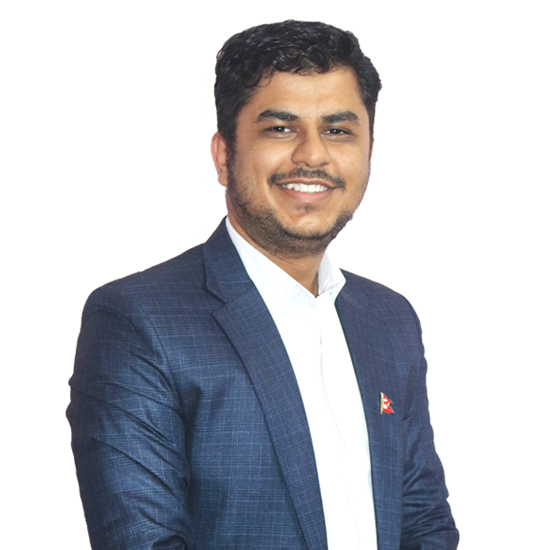 CA Gaurav Pokharel
Partner · P.S.G. & Associates
Every organisation that plans to run social welfare work in Nepal with outside funding meets the same gatekeeper early on: the Social Welfare Council. For a new NGO board member, a programme officer, or an INGO country lead, the rules can feel scattered across an old Act, a set of Rules, and several directives that have been amended more than once. This orientation brings the essentials into one place so your team can plan projects, prepare budgets, and stay compliant without last-minute surprises.
Whether you are registering a national NGO for the first time or setting up an international non-governmental organisation in Nepal, the same core framework applies. Understanding it before you write a proposal saves months of back-and-forth later.
What the Social Welfare Council is and why it matters
The Social Welfare Council, often shortened to SWC, is the national body that coordinates, supports, and supervises social organisations in Nepal. It was set up under the Social Welfare Act, 2049 (1992) and works through the concerned ministry, currently the Ministry of Women, Children and Senior Citizens.
In practice the SWC is the point of contact for three things that matter to most organisations:
- Affiliation of national NGOs and permission for INGOs to work in the country;
- Approval of projects that use foreign or external assistance; and
- Oversight of reporting, accounts, and audit for affiliated organisations.
If any part of your funding comes from outside Nepal, you will deal with the SWC. That single fact shapes most of the process described below.
The legal framework every NGO and INGO should know
Four instruments do most of the work. Reading them in order helps, because each one builds on the last.
- Social Welfare Act, 2049 (1992). The parent law. It creates the Council, defines social welfare activity, and sets the rules for permission, affiliation, economic assistance, accounts, audit, and the annual report.
- Social Welfare Rules, 2049. The procedural rules framed under the Act.
- Project Agreement Directive, 2071. Now in its fifth amendment (2081), this is the operative rulebook for project proposals and budgets. Most budget questions are answered here.
- Supporting directives. These cover approval of foreign aid, and affiliation and renewal, along with the standard formats you will submit as annexes.
A useful habit is to trace every figure and every activity in a proposal back to one of these documents. Reviewers do the same thing, so a proposal that already speaks their language moves faster.
Registration and affiliation with the SWC
National NGOs
A Nepali social organisation is first registered with the District Administration Office under the Associations Registration Act, or with the Office of the Company Registrar where relevant. After registration, the organisation applies to the SWC for affiliation under Section 13 of the Act. Affiliation is what allows the organisation to receive and mobilise assistance through the Council and to partner with INGOs.
Affiliation is not a one-time step. It must be renewed each year, and lapsed affiliation is one of the most common reasons a partnership stalls. Keep renewal, tax clearance, and the audit report current so that you are always eligible to sign or continue a project.
International NGOs
An INGO that wants to work in Nepal applies to the SWC for permission under Section 12 of the Act. The Council decides within the period set by law, and the permitted INGO then signs a general agreement with the Council before starting any work. From there, individual projects are taken forward through project agreements.
INGOs almost always work through a Nepali counterpart. The directive expects the counterpart to be selected transparently, usually through an Expression of Interest process, with priority to organisations registered in the district where the project will run.
The project agreement process
A project that uses foreign assistance cannot simply begin. It is approved and signed first. The main steps are these:
- The INGO and its counterpart prepare a proposal in the prescribed format, with the logical framework and the budget as annexes.
- A pre-consensus letter is obtained from the concerned local government where the project will operate.
- The proposal is registered at the SWC and reviewed by the relevant section, then by the project analysis subcommittee.
- The Council coordinates with the concerned ministry and other government bodies for their consent.
- Once cleared, the project agreement is signed, and only then can the budget be released and spending begin.
For sensitive sectors such as hospitals, schools, and children's homes, prior approval from the concerned line agency must be attached to the proposal.
Budget rules set by the SWC
This is where careful preparation pays off, because the SWC applies specific limits and formats. The following rules come mainly from Clause 21 and related clauses of the Project Agreement Directive.
- Administrative cost is capped at 20 percent. Overhead and administrative expenses must not go above one-fifth of the project budget. If an INGO needs a regional or district office to support the work, the reason has to be written into the agreement itself.
- Unit-based costing is required. Both administrative and programme costs must be broken down into units, showing quantity and unit price. Lump-sum lines are not accepted.
- Staff salaries are shown by position. Pay and benefits appear against each post. The salary and benefits of foreign experts cannot be charged to the project budget.
- Hardware and software must be balanced. Physical or construction-heavy spending and capacity or service spending should be in reasonable balance, unless a government line agency recommends otherwise.
- Oversight costs are budgeted. Provision must be made for midterm and final evaluation by the SWC, and for the central and district project advisory committees.
- Construction has limits. Material and labour rates cannot exceed the government minimum norms, and building work needs land-ownership evidence, a building permit, and an approved map.
- Budgets are gender-responsive. All budgets and programmes are expected to reflect gender equality.
- Multi-area and multi-partner projects are split. Where a project covers several districts or partners, the budget must show the amounts for each district and each partner separately.
- Social audit is planned. A public or social audit is expected before the project starts and after it is completed.
A common practical tip: keep quantities and rates defensible. They are the first thing both the SWC reviewer and your statutory auditor will test.
Foreign aid approval and banking
Because the SWC framework is built around external assistance, the source of funds decides how much process applies.
Funds raised entirely inside Nepal (from domestic donors, the government, community contributions, or the organisation's own resources) do not trigger a project agreement. They are still disclosed, accounted, audited, and, in the case of public collection, may need approval under the donation collection rules.
Money that comes from abroad is a different matter. Foreign assistance must be approved before it is used, must be routed through a commercial bank operating in Nepal, and must comply with the Asset (Money) Laundering Prevention Act. Foreign grant amounts are also recorded in the electronic system maintained by the SWC and the Ministry of Finance, known as AMIS.
There is one small-project relief in the Act. Yearly assistance up to NPR 200,000 for work that will be finished immediately can proceed on prior notice to the Council, with a report submitted within three months. Anything larger follows the full process.
Reporting, AMIS, and audit
Approval is the beginning of the compliance cycle, not the end. The approved budget becomes the benchmark for every report that follows, and reporting is done for each project on the Nepali fiscal year, which runs from the first of Shrawan to the end of Ashad.
The trimester financial reporting cycle works like this:
- First trimester: Shrawan to Kartik, reported to the SWC in the first week of Mangsir.
- Second trimester: Mangsir to Falgun, reported in the first week of Chaitra.
- Third trimester: Chaitra to Ashad, reported in the first week of Shrawan.
If you want a ready format for these reports, our free SWC trimester report format covers the financial and technical sheets, with a filled sample.
Alongside the trimester reports, an inception report is submitted within the first six months of the project. The annual progress report and the audit report go to the SWC, the concerned ministry, the National Planning Commission, the local government, and the concerned line agencies. Under Section 23 of the Act, affiliated organisations submit the audited report within six months of the end of the fiscal year.
Amending an approved budget
Plans change, and the directive allows controlled changes through the amendment format. Two ideas are worth keeping separate, because people often confuse them.
A no-cost extension is about time. The project gets a longer period to finish, but the total approved budget does not increase. It simply spends the balance that is already approved and unspent. No new money is added.
A budget reallocation is about distribution. It moves funds between budget headings while the total stays the same. Reallocation is limited to 20 percent of the total agreement budget, and the amount reallocated cannot exceed NPR 10 crore.
On frequency, a project shorter than three years can usually be amended once, and a project longer than three years up to twice, with a no-cost extension allowing one further amendment. Adding a new local level or district needs the prior written consent of the concerned local government.
Common compliance mistakes NGOs make
Most problems are avoidable. These are the ones we see most often in practice:
- Administrative cost drifting above the 20 percent ceiling;
- Lump-sum budget lines with no unit, quantity, or rate;
- Budgets that do not reconcile with the logical framework and activities;
- No provision for evaluation, advisory committees, or social audit;
- Foreign expert salaries charged to the project;
- Affiliation, tax clearance, or renewal that has lapsed;
- Foreign funds received outside the approved banking channel; and
- Missing AMIS entry or late trimester reports.
A short compliance check before submission catches almost all of these.
Frequently asked questions
Do we need SWC approval for a grant raised inside Nepal?
A grant raised entirely from domestic sources does not require a project agreement, because the approval regime is built around foreign assistance. General compliance still applies, and public fundraising may need approval under the donation collection rules. If any part of the funding is foreign, approval is required.
What is the maximum administrative cost the SWC allows?
Administrative and overhead cost must not exceed 20 percent of the project budget. Any regional or district office set up to support the project must be justified in the agreement.
What is a no-cost extension?
It is an extension of the project period without any increase in the approved budget. The project uses its unspent balance over a longer time. It is different from a budget reallocation, which moves money between headings within the same total.
How often must an NGO report to the SWC?
Financial progress is reported every trimester on the Nepali fiscal year, along with an inception report in the first six months and an annual progress and audit report.
Is there a specific rule for crowdfunding?
The current SWC framework has no dedicated crowdfunding provision. Domestic online fundraising is treated as public contribution and may fall under the donation collection rules, while any funds received from abroad are treated as foreign assistance and follow the full approval, banking, and reporting process.
Getting the orientation right from the start
The Social Welfare Council process rewards organisations that prepare well. A proposal that follows the format, a budget that respects the ceilings, and a reporting calendar that is set up on day one will move faster and face fewer questions. The cost of getting it wrong is usually time, and in the development sector time is programme delivery.
At P.S.G. & Associates, Chartered Accountants, we help NGOs and INGOs in Nepal with orientation, project budgeting, SWC compliance, financial reporting, and audit. If your team is preparing a new project or reviewing an existing one, a short orientation session can prevent the most common and most costly mistakes.
This article is for general guidance and reflects the framework under the Social Welfare Act, 2049, the Social Welfare Rules, 2049, and the Project Agreement Directive, 2071 with its later amendments. For a specific project, confirm the current requirements with the Social Welfare Council, since the Council applies judgment case by case. Written by CA Gaurav Pokharel, P.S.G. & Associates, Chartered Accountants.